
Trusted Molecular Sieves Manufacturer and Supplier
Molecular sieves are porous materials made of synthetic crystalline metal–aluminosilicates, commonly in the form of zeolites. Their uniform pore size allows only molecules smaller than a specific diameter to pass through, making them useful for separating substances. They are also widely used as adsorbents for both gases and liquids.
They have the capacity to adsorb water amounts up to 22% of its own weight and may also be used as a desiccant.
Known for their precise pore sizes and high adsorption capacity. They selectively adsorb molecules based on molecular size and polarity, making them ideal for drying, purification, and separation processes across multiple industries.
Available in multiple ratings such as 3A, 4A, 5A, 10X and 13X, both in pallet and bead forms.
Molecular sieves are synthetic crystalline aluminosilicates (zeolites) known for their precise pore sizes and high adsorption capacity. They selectively adsorb molecules based on molecular size and polarity, making them ideal for drying, purification, and separation processes across multiple industries.
Global Adsorbents supplies premium-grade molecular sieves in various pore sizes and formulations (3A, 4A, 5A, 10X, 13X), available in both beads and pellet forms for tailored performance across different systems.
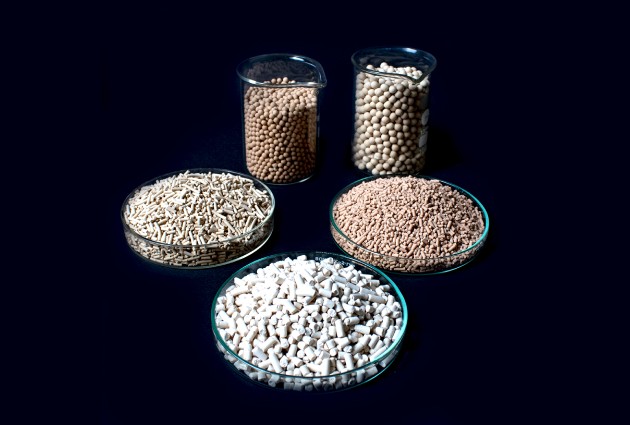
Packaging: MS/SS Steel Drum (100 Litres and 200 Litres)
Major Applications of Molecular Sieves

Gas Drying (Natural Gas, Hydrogen, Oxygen, Nitrogen)
Global Adsorbent’s molecular sieves deliver ultra-low dew points, preventing corrosion, reducing downtime, and extending pipeline life—maximizing operational ROI in gas processing facilities.
Solvent & Liquid Drying (Methanol, Ethanol, LPG, Toluene)
Our sieves efficiently remove trace moisture, protecting storage tanks and process equipment, reducing maintenance costs, and ensuring consistent product quality for better profitability.
Air Separation Units (ASU)
Global Adsorbent molecular sieves enable high-purity oxygen and nitrogen production, minimizing energy loss, protecting cryogenic systems, and delivering long-term cost efficiency for ASU operators.
Petrochemical Purification
Engineered for demanding processes, our molecular sieves remove water and impurities, protecting reactors, reducing unplanned shutdowns, and increasing yield—driving higher returns from petrochemical operations.
Industrial Water Systems
Global Adsorbent manganese sand ensures optimal removal of problem metals, safeguarding heat exchangers, boilers, and processing equipment for longer operational life and efficiency.
Pharmaceutical & Fine Chemical Industries
Global Adsorbent’s high-capacity sieves ensure moisture-free synthesis, improving product stability, reducing waste, and protecting critical equipment—delivering regulatory compliance with maximum operational cost savings.
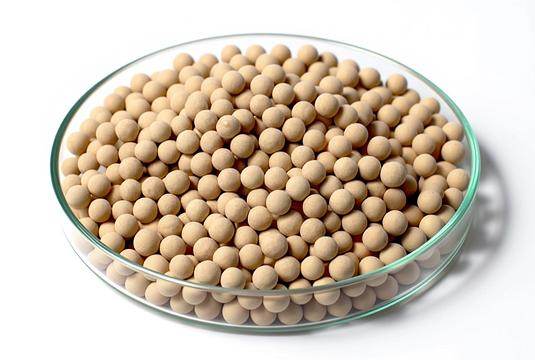
Insulated Glass (IG) Units
Our sieves prevent fogging and condensation, extending IGU lifespan, reducing warranty claims, and ensuring lasting clarity—boosting both customer satisfaction and manufacturer profitability.
Refrigerant Drying
Global Adsorbent molecular sieves remove harmful moisture from refrigerants, preventing acid formation, reducing compressor failure, and extending HVAC system life for lower lifetime operating costs.
Desiccant Cartridges
Designed for longevity, our molecular sieves in cartridges provide consistent moisture control, protecting systems from corrosion and ensuring dependable performance at a competitive lifecycle cost.
Variants Offered
3A Molecular Sieve
- Pore Size: ~3 Ångströms
- Best For: Adsorbing water while excluding larger molecules such as unsaturated hydrocarbons or ethanol
- Used In:
- Drying of polar liquids (e.g., methanol, ethanol)
- Packaging desiccant
- Insulated glass windows
5A Molecular Sieve
- Pore Size: ~5 Ångströms
- Best For: Adsorbing water, CO₂ and normal paraffins (e.g., n-pentane)
- Used In:
- Natural gas dehydration
- Hydrocarbon separation
- PSA oxygen and hydrogen generators
13X Molecular Sieve
- Pore Size: ~10 Ångströms (similar to 10X but with a different crystal structure)
- Best For: Adsorbing water, CO₂, H₂S, and larger polar molecules
- Used In:
- CO₂ removal in air separation
- LNG and oxygen plants
- Solvent and acid gas removal
4A Molecular Sieve
- Pore Size: ~4 Ångströms
- Best For: Adsorbing water, ammonia, methanol, ethanol, and other small molecules
- Used In:
- General gas drying
- Refrigerant and air drying
- Paint and coating industries
10X Molecular Sieve
- Pore Size: ~10 Ångströms
- Best For: Adsorbing larger hydrocarbons and moisture
- Used In:
- Specialty gas drying
- Hydrocarbon recovery units
- Large molecule purification
How to Choose the Right Molecular Sieve
| Requirement | Recommended Variant |
|---|---|
| Moisture removal only | 3A or 4A |
| Remove water + CO₂ + light hydrocarbons | 5A |
| PSA applications (O₂, H₂ generation) | 5A or 13X |
| CO₂ and H₂S removal from natural gas | 13X |
| High-volume hydrocarbon drying | 10X |
Choose 3A or 4A for selective water removal (3A for ethanol drying).
Choose 5A to selectively separate carbon dioxide (CO₂) and straight-chain hydrocarbons.
Choose 13X or 10X for larger molecules or acid gas removal.
Best Practices for Use & Longevity
Proper Activation
Before first use, molecular sieves must be properly activated by heating at 250–300°C under vacuum or purge gas to remove residual moisture.
Avoid Exposure to Air
Once activated, store in airtight containers to prevent premature adsorption.
Use Dust-Free Grades
For sensitive systems, use sieves with low attrition and dust to protect valves and instrumentation.
Regeneration
Regenerate using hot purge gas or vacuum heating cycles. Use the appropriate temperature profiles for each variant.
Storage
Always store unused product in a dry, sealed container or nitrogen-flushed packaging.
Column Packing
Fill uniformly to avoid channeling. Use sieve guards if reusing old columns.
Client FAQ – Molecular Sieves
What’s the difference between 3A, 4A, 5A, 10X, and 13X molecular sieves?
- 3A: Only water
- 4A: Water and small polar compounds
- 5A: Water + CO₂ + linear hydrocarbons
- 10X/13X: Larger molecules, H₂S, CO₂, mercaptans
Beads vs Pellets – which should I choose?
- Use beads for high-pressure or fluid-flow systems (e.g., gas drying towers)
- Use pellets in compact or static applications (e.g., small lab columns)
Do I need to activate the molecular sieves before use?
Yes. Activation is crucial. The sieves need to be heated to 250–300°C to remove any adsorbed moisture before use.