
Ion Exchange Resins for Water Separation & Purification Processes
Global Adsorbents’ Glo-ION range of ion exchange resins is designed for high-efficiency removal of dissolved ions in water, wastewater, and gas-phase processes. Our cationic and anionic resins, available in gel and macroporous forms, deliver long service life, high exchange capacity, and cost-effective performance across diverse industrial sectors.
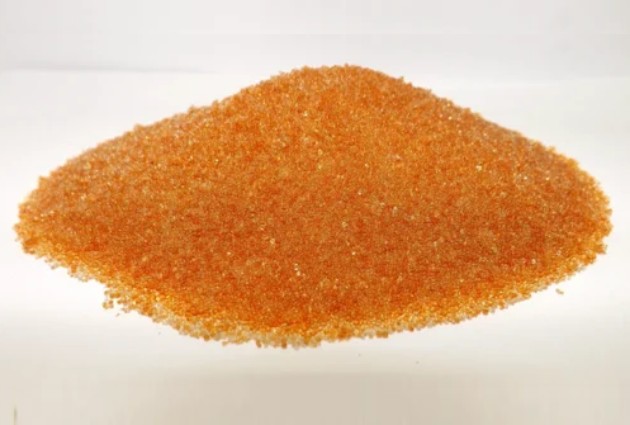
High-Performance Cationic & Anionic Resins for Critical Operations
Key benefits:

Gel & macroporous designs to suit varying water quality and process needs
Optimized bead structure for maximum exchange efficiency
Stable performance under high-temperature and high-TDS conditions
Suitable for both co-flow and counter-flow regeneration systems
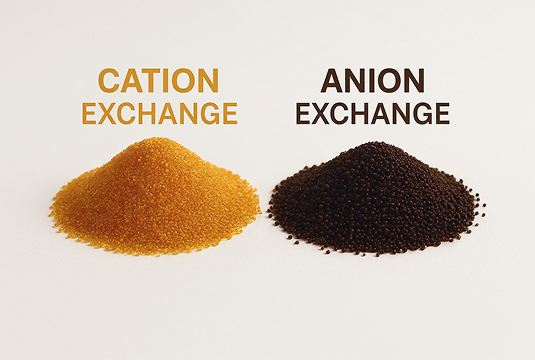
Advanced Technology for Reliable Ion Exchange Performance
Our manufacturing process ensures uniform bead size distribution and high mechanical strength, reducing resin breakage and extending operational life.
High operating capacity for efficient ion removal
Low pressure drop to maintain flow efficiency
Resistance to fouling, osmotic shock, and thermal degradation
Applications of Ion Exchange Resins
Water & Wastewater Treatment
Used for demineralization, softening, and polishing in municipal and industrial water plants.
Petrochemical, Refining & Gas Processing
Purifies process streams, removes contaminants from amine solutions, and conditions feedwater for critical refinery units.
Food & Beverage De-mineralization
Removes unwanted minerals in sugar syrup, juice processing, and beverage production, meeting food-grade compliance standards.
Why Choose Ion Exchange Resins
Proven performance in diverse water chemistries
Long resin lifespan, reducing replacement frequency and downtime
Backed by technical service and process optimization support
Competitive bulk pricing with global delivery capability
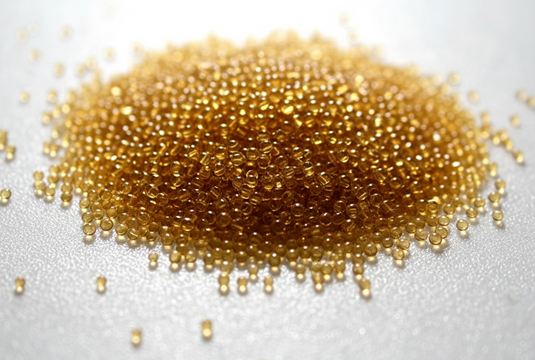
Packaging & Storage Guidelines
Store in the original sealed,
moisture-tight packaging
Avoid exposure to freezing
conditions or direct sunlight
Avoid contact with oxidizers
Request a Sample or Technical Consultation
Global Supply with Consistent Quality Standards
Glo-ION Ion Exchange Resins
How should ion exchange resins be stored for maximum shelf life?
Store in a cool, dry place with sealed packaging, avoiding direct sunlight and freezing conditions for optimal resin stability and performance.
Can resins be regenerated multiple times without performance loss?
Yes, with proper regeneration cycles using recommended chemicals, resins maintain efficiency and extend service life in industrial and water treatment applications.
What type of water should be used for resin backwashing?
Always use clean, filtered water at controlled flow rates during backwash to remove impurities without damaging resin bead structure.
Can Activated Bleaching Earth be used in continuous as well as batch refining systems?
Yes. It works effectively in both batch and continuous refining systems, providing consistent performance and optimal purification results.
Does Global Adsorbents provide technical support for using ABE?
Yes. Our experts offer guidance on optimal dosage, process parameters, and troubleshooting to help refine oils efficiently and cost-effectively.
How do I prevent fouling or clogging of ion exchange resins?
Regular monitoring, pre-filtration, and chemical cleaning schedules prevent organic, iron, and particulate fouling, ensuring consistent resin performance and longevity.
Are ion exchange resins compatible with high-temperature operations?
Most resins have specific temperature limits; exceeding them reduces efficiency.